Complete guide to interlinings and reinforcement materials in footwear and apparel
Every shoe or garment is more than what you see on the surface. Behind the fabric, leather, or outer material, there are hidden layers that give strength, shape, and comfort. These hidden layers are known as interlinings and reinforcement materials. They play a key role in how a shoe fits, how long it lasts, and how a garment holds its form.
In footwear, interlinings help create structure so that shoes do not collapse or lose shape after a few uses. In apparel, interlinings keep collars crisp, waistbands firm, and jackets sharp. Reinforcement materials like tapes and laminations add durability by supporting weak points such as seams, edges, and high-pressure areas. Without these materials, products would wear out faster and lose their professional finish.
This guide takes you through everything you need to know about interlinings, reinforcement tapes, and foam laminations in footwear and apparel. You will learn about the different types of materials, their uses, the processes behind them, and how modern innovations are shaping the industry. Along the way, you’ll also find practical insights and examples that can help both professionals and enthusiasts understand why these materials are so important.
What are interlinings and reinforcement materials?
Interlinings and reinforcement materials are often invisible to the eye, but they form the backbone of many garments and shoes. To understand their role, it helps to look at what each term means and how they are used.
Interlinings in fashion and footwear
An interlining is a layer of material placed between the outer fabric and the inner lining. Its job is to give body, support, and stability to the final product. In apparel, interlinings are commonly found in collars, cuffs, waistbands, and jackets. They make sure the fabric holds its shape instead of collapsing. In footwear, interlinings strengthen the upper part of the shoe so it can stand tall, bend where it should, and still return to its original form.
Purpose of reinforcement materials
Reinforcement materials are designed to protect weak points and add extra strength. These can include tapes, adhesives, or special fabrics placed at areas that face more stress, such as seams, edges, or heel counters in shoes. By using reinforcements, manufacturers extend the life of the product and improve its performance under daily use.
Interlinings vs linings and foam
It is easy to confuse interlinings with linings or even foam, but each has a distinct role. A lining is the inner layer that touches the skin, designed for comfort and a neat finish. Foam is mainly used for cushioning and softness. An interlining, on the other hand, is a hidden layer placed for structure and reinforcement. When used together, these materials balance comfort, strength, and appearance.
Types of interlinings
Interlinings are chosen with care because they affect the comfort, look, and durability of a product. Let’s explore the different types of interlinings with real-world examples and comparisons.
Fusible interlinings
Fusible interlinings have adhesive on one side that bonds with fabric when heat is applied.
Example in apparel
Shirt collars often use fusible interlinings to keep them sharp and crisp.
Example in footwear
Casual sneakers may use fusible interlinings in the upper panels to maintain shape without adding bulk.
Advantages
- Creates a smooth and stable structure
- Easy to apply in mass production
- Reduces labor cost
Limitations
- Cannot be used on delicate or heat-sensitive fabrics
- Adhesive may weaken after many washes
Non-fusible interlinings
These interlinings are not bonded with heat. They are either sewn in or placed loosely between fabric layers.
Example in apparel
A tailored suit jacket often uses non-fusible interlinings in the chest area, giving it a natural roll and drape.
Example in footwear
Premium leather dress shoes often include sewn-in interlinings for flexibility and breathability.
Advantages
- Softer, more natural movement
- Better for breathable fabrics
- Longer lasting in premium products
Limitations
- More time-consuming
- Requires skilled labor
Special performance interlinings
Performance-focused interlinings go beyond shape and structure. They add functional benefits.
Waterproof interlinings
Used in raincoats and hiking boots to block moisture.
Breathable interlinings
Used in athletic wear and sports shoes to keep users cool.
Durable interlinings
Used in industrial uniforms and safety footwear for extra resistance.
Example: A work boot may use a durable, water-resistant interlining to handle harsh conditions while keeping the wearer comfortable.
| Type | Common Use | Advantages | Limitations | Example Product |
|---|---|---|---|---|
| Fusible | Shirts, sneakers, waistbands | Smooth finish, cost-effective, stable | Not for delicate fabrics, may weaken | Business shirt collar, sneaker upper |
| Non-Fusible | Suits, dress shoes, jackets | Natural drape, breathable, long-lasting | Slower, skilled labor required | Tailored suit jacket, leather dress shoe |
| Special Performance | Outdoor gear, work boots, sportswear | Waterproof, breathable, durable | Often more expensive | Hiking boot, raincoat, sports shoe |
Reinforcement tapes in apparel and footwear
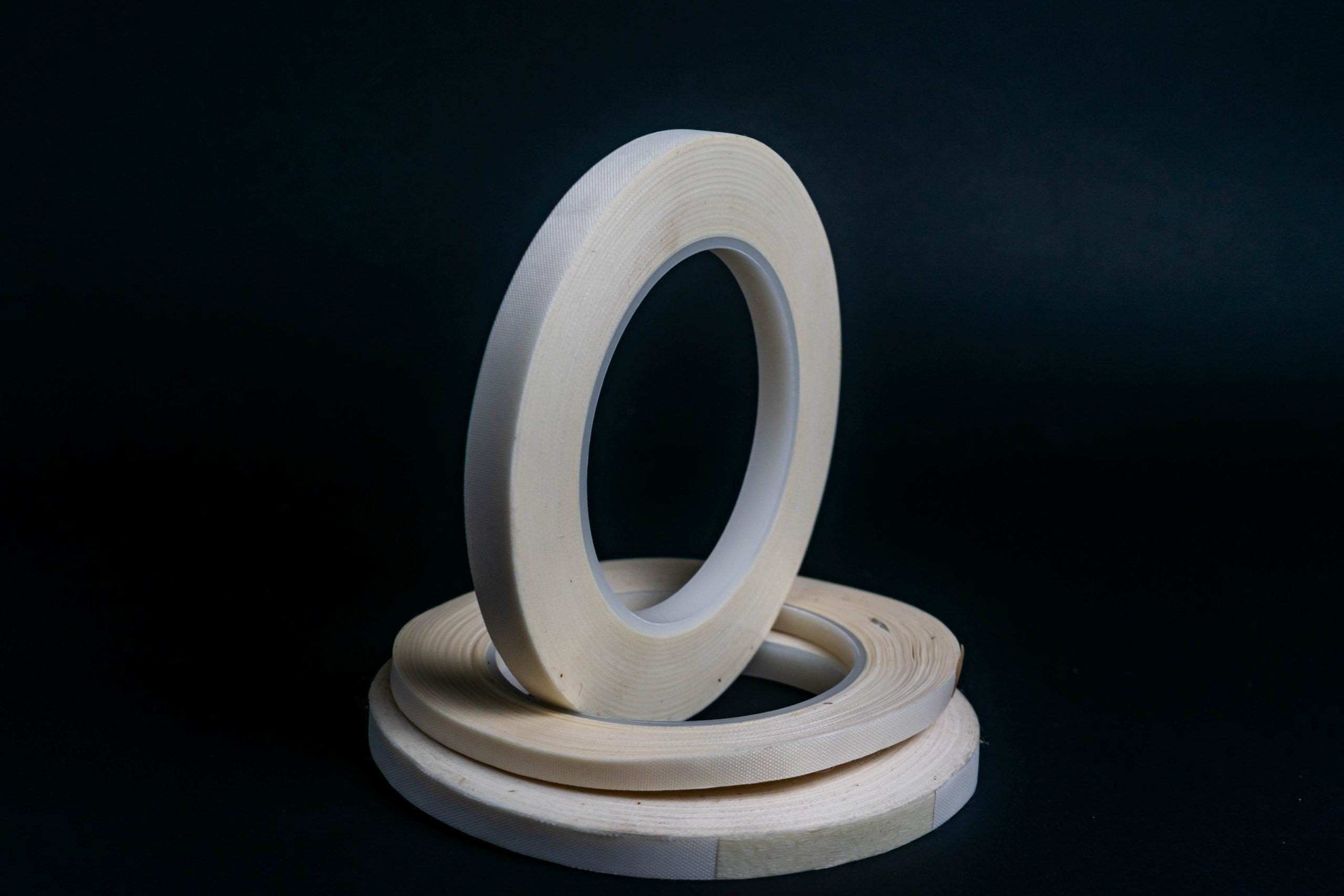
Reinforcement tapes are narrow strips of material used to strengthen and stabilize weak points in shoes and garments. They may not be visible once the product is finished, but they make a big difference in durability, comfort, and long-term performance.
What is reinforcement tape?
Reinforcement tape is typically a woven, knitted, or adhesive-backed strip. It is applied along seams, edges, or stress areas to prevent stretching, tearing, or deforming. In shoes, it helps the upper keep its shape. In apparel, it keeps collars, shoulders, and waistbands from sagging or distorting.
Applications in shoes, bags, and apparel
Shoes
Used around eyelets, heel counters, and along seams to stop tearing under pressure. For example, in running shoes, reinforcement tapes support the upper where laces pull the most.
Bags
Found in straps and handle joints to prevent stretching or breaking under heavy weight.
Apparel
Applied at necklines, armholes, waistbands, and button plackets. In sportswear, they help keep stretchy fabrics from losing shape after repeated wear.
Fabric reinforcement tape vs adhesive bonding solutions
There are two main approaches
Fabric reinforcement tapes
Made of woven or non-woven fabric, they are stitched or fused into garments and shoes. They offer flexibility and breathability.
Adhesive bonding tapes
Use glue or heat activation to bond layers together. They are faster for mass production and allow for seamless finishes, but may not last as long as fabric options under heavy use.
Customized reinforcement adhesives for industrial needs
In industrial footwear and uniforms, standard reinforcement tapes are not always enough. Customized adhesives are developed to withstand higher stress, moisture, or temperature conditions. For example:
Work boots
Adhesive reinforcement tapes are used along seams to prevent water leakage.
Safety uniforms
Fire-resistant adhesive tapes are applied to maintain strength even under extreme heat.
| Type | Where it’s used | Advantages | Limitations | Example product |
|---|---|---|---|---|
| Fabric Tapes | Apparel seams, shoe uppers, collars | Flexible, breathable, durable | Slightly slower to apply | Formal shirt, leather shoes |
| Adhesive Bonding Tapes | Fast fashion, sneakers, lightweight bags | Quick application, seamless finish | May weaken under high stress or washing | Running shoes, tote bags |
| Customized Adhesives | Industrial footwear, safety uniforms | Built for extreme durability and conditions | Higher cost, requires specialized process | Work boots, fire-resistant clothing |
Foam lamination in footwear and apparel
Foam lamination is a process where foam is bonded to fabrics or other materials to improve comfort, strength, and performance. It is widely used in footwear and apparel because it provides both cushioning and durability.
What is foam lamination?
Foam lamination involves attaching a foam layer to textiles, leather, or synthetic materials. This creates a combined material that is stronger, softer, and more versatile than either material alone. The bonding is done using adhesives, heat, or specialized lamination machines.
Process of foam lamination
The process typically follows these steps:
- Selection of materials: Choosing the right foam type (EVA, PU, PE) and fabric or leather.
- Bonding method: Adhesive or heat lamination depending on the end-use.
- Compression and finishing: Applying pressure to ensure even bonding and a smooth surface.
- Cutting and shaping: The laminated material is cut and prepared for production.
Benefits of foam lamination in shoes and apparel
Foam lamination is popular because it brings multiple benefits;
- Comfort – Provides cushioning in shoes, jackets, and activewear.
- Durability – Strengthens fabrics against wear and tear.
- Flexibility – Allows materials to stretch without breaking apart.
- Protection – Creates water-resistant or shock-absorbing properties.
Technical laminations – foam to hard bases
In footwear, foam lamination often goes beyond fabric. It can be laminated to hard bases like rubber or plastic midsoles. This is common in sports shoes where cushioning is critical. By laminating foam to harder structures, manufacturers create soles that absorb impact but still remain stable.
Example: Running shoes use laminated EVA foam midsoles for comfort and performance. Hiking boots may laminate foam to harder bases for both cushioning and foot protection on rough terrain.
Foam laminations in apparel
Foam is not just for shoes. It is also used in apparel to provide body, insulation, or structure.
- Outerwear: Foam laminations in jackets add warmth without adding bulk.
- Protective clothing: Foam layers improve shock absorption in safety wear.
- Fashion: Structured handbags often use foam laminations to hold their shape.
Manufacturers and how to choose the right partner
Foam lamination requires precision. When choosing a manufacturing partner, look for:
- Experience with footwear and apparel laminations
- Access to advanced machinery for even bonding
- Ability to customize foam thickness and density
- Quality control processes to prevent peeling or weak bonding
Example: A sports brand will require a partner capable of producing lightweight, breathable laminations for sneakers, while a safety gear company may need thicker, fire-resistant foam laminations.
| Application | Where it’s used | Benefits | Example product |
|---|---|---|---|
| Foam to Fabric | Apparel, linings, lightweight shoes | Comfort, breathability, flexibility | Sports jackets, sneakers |
| Foam to Leather | Premium footwear, handbags | Structure, softness, durability | Dress shoes, structured handbags |
| Foam to Hard Bases | Running shoes, hiking boots | Cushioning with stability | EVA midsoles, outdoor boots |
| Foam to Protective Gear | Safety uniforms, industrial wear | Shock absorption, insulation | Fire-resistant gear, helmets |
Real world example
Consider a pair of running shoes. The midsole is made from EVA foam laminated to a rubber outsole. This lamination provides both shock absorption for the runner’s joints and enough firmness to keep the shoe stable. In contrast, a winter jacket may use foam laminated to fabric to add warmth and structure without becoming bulky or stiff.
Shoe lining and cushioning materials
The comfort and performance of a shoe are not only determined by the outer material. The inside layers, including linings and cushioning, play a critical role in how a shoe feels, breathes, and lasts over time. These hidden parts influence whether a shoe is comfortable on day one and whether it still feels good after months of use.
What is shoe lining and why it matters?
The shoe lining is the material inside the shoe that touches the foot. Its purpose is to provide comfort, regulate temperature, absorb moisture, and protect the upper material from sweat and wear. Without a proper lining, shoes can feel rough, trap heat, or wear out quickly.
Example: In leather dress shoes, a soft leather lining prevents chafing and extends the life of the shoe. In sneakers, textile linings keep feet cool during physical activity.
Common shoe lining materials
Textile linings
- Lightweight and breathable
- Good for casual shoes, sneakers, and summer footwear
- Example – Running shoes with mesh textile lining for air circulation
Leather linings
- Durable, flexible, and premium in feel
- Absorbs moisture and adapts to the shape of the foot
- Example – High-quality leather loafers with full-grain leather lining
Synthetic linings
- Cost-effective, versatile, and easy to clean
- Can mimic leather or textile performance
- Example – Affordable sneakers and children’s shoes often use synthetic linings
Foam in shoes: cushioning and comfort explained
Foam is widely used inside shoes to provide cushioning and shock absorption. The type of foam and how it is applied directly affect comfort and durability.
- EVA Foam (Ethylene Vinyl Acetate): Lightweight, flexible, and common in midsoles for running shoes.
- PU Foam (Polyurethane): Denser, more durable, and used in work boots or shoes that require long-term support.
- Memory Foam: Adapts to the shape of the foot, providing personalized comfort, often used in insoles.
Example: A running shoe may use EVA foam in the sole for lightweight cushioning, while a safety boot may use PU foam for long-lasting support during long shifts.
Laminated cushioning materials & footwear innovations
Foam and fabrics are often laminated together to create multi-functional cushioning. This enhances both comfort and durability.
- Athletic Footwear: Laminated cushioning helps maintain stability while providing impact absorption.
- Casual Wear: Shoes with laminated cushioning feel softer and adapt better to daily wear.
- Innovations: Brands are developing energy-return foams that reduce fatigue and improve performance during sports or long walks.
| Material Type | Main Benefit | Best For | Example Product |
|---|---|---|---|
| Textile Lining | Breathability, lightweight | Sneakers, summer shoes | Mesh running shoes |
| Leather Lining | Durability, premium feel | Dress shoes, premium casuals | Leather loafers |
| Synthetic Lining | Affordable, easy to clean | Budget shoes, children’s footwear | Synthetic sneakers |
| EVA Foam | Lightweight cushioning | Running shoes, trainers | EVA midsole sneakers |
| PU Foam | Durability, strong support | Work boots, safety shoes | PU cushioned safety boots |
| Memory Foam | Personalized comfort | Casual wear, lifestyle shoes | Memory foam insoles |
Real world example
Think about a pair of sneakers designed for daily use. The textile lining keeps the foot cool, while an EVA foam midsole provides lightweight cushioning. For comparison, a pair of formal leather shoes may use a soft leather lining with PU foam insoles, giving both a premium feel and lasting comfort. Each choice is made to balance comfort, function, and durability for the intended purpose of the shoe.
Innovations and the future of interlinings & reinforcement
The world of footwear and apparel is evolving rapidly, and so are the materials that support their structure. Interlinings, reinforcement tapes, and foam laminations are no longer just hidden layers. They are becoming smarter, more sustainable, and more versatile to meet the demands of modern consumers.
Sustainable materials in interlinings and laminations
As the fashion and footwear industries respond to growing environmental concerns, sustainable interlinings and reinforcements are gaining traction.
Recycled fibers
Interlinings made from recycled polyester or PET bottles are now widely used in jackets and sneakers.
Plant-based options
Some brands are experimenting with interlinings made from natural fibers like cotton and hemp, which break down more easily at the end of a product’s life.
Eco-friendly adhesives
Water-based bonding solutions are replacing solvent-based adhesives, reducing environmental impact.
Example: A global sportswear brand uses recycled polyester interlinings in its running shoes to lower its carbon footprint without compromising performance.
Smart and energy-specific cushioning materials
New research is pushing foam laminations beyond basic comfort. Modern foams can adapt to movement, return energy, and improve overall performance.
Energy-return foams
Common in running shoes, these foams store energy when compressed and release it during movement, reducing fatigue.
Temperature-sensitive foams
Used in both footwear and outerwear, these foams adjust their firmness based on body heat, offering comfort in different conditions.
Impact-absorbing foams
Designed for safety footwear and sports gear, they reduce shock and protect the wearer from injury.
Example: Marathon shoes often use energy-return foams that give runners an extra boost with every step. Industrial boots may use impact-absorbing foams to protect workers from long-term strain.
Technology trends in footwear and apparel manufacturing
Innovation is not limited to materials themselves. Technology is reshaping how interlinings and reinforcements are applied.
Laser bonding
Provides precision placement of reinforcement tapes without bulk stitching.
3D lamination
Creates multi-layered cushioning with better breathability and flexibility.
Digital prototyping
Allows manufacturers to test reinforcement placement virtually before cutting any material, saving time and resources.
Example: A high-performance sneaker may use laser-bonded reinforcement tapes for seamless durability, while luxury fashion houses use 3D lamination techniques for lightweight yet structured garments.
Future outlook
The demand for comfort, durability, and sustainability will continue to drive change in interlinings and reinforcement materials. We can expect to see:
- Wider adoption of biodegradable interlinings.
- More energy-efficient production methods.
- Smarter cushioning materials that adjust in real time to the wearer’s movement.
The future will blend function with responsibility, ensuring products not only perform better but also have less impact on the planet.
Why choose Bond and Built as your manufacturing partner?
When selecting a partner for footwear and apparel components, it is not only about materials but also about trust, consistency, and innovation. Bond & Built has positioned itself as a reliable choice for brands that value both quality and long-term collaboration.
Proven expertise in interlinings and reinforcements
With years of specialized experience, Bond & Built has developed a deep understanding of interlinings, reinforcement tapes, and foam laminations. Every product is designed to meet the practical needs of manufacturers, from ensuring structural strength to enhancing comfort.
What this means for you
- You can count on interlinings that balance durability with flexibility.
- Reinforcement solutions that strengthen without adding unnecessary weight.
- Cushioning materials that elevate the end-user’s experience.
Commitment to quality and consistency
In footwear and apparel production, even minor inconsistencies can affect the final product. Bond and Built uses strict quality controls and modern machinery to ensure every batch meets high standards.
Example: Whether producing interlinings for casual wear or reinforcement tapes for performance footwear, Bond & Built maintains the same level of precision and consistency across orders.
Customized solutions for every brand
No two projects are the same. A fashion brand may prioritize lightweight comfort, while a workwear manufacturer may focus on strength and safety. Bond & Built offers customized material solutions tailored to the client’s design and performance requirements.
Our approach
- Collaborative discussions during the design stage.
- Tailor-made material combinations for specific applications.
- Flexibility in order sizes, from small runs to large-scale production.
Innovation that keeps you ahead
Bond and Built actively invests in new materials and processes that align with global trends. From eco-friendly interlinings to advanced foam laminations, the company ensures its partners always have access to the latest innovations.
Practical impact: Your brand can integrate sustainability and cutting-edge comfort features without increasing complexity in the production process.
Building long-term partnerships
Bond and Built’s focus is not on one-off transactions but on creating reliable partnerships. By providing consistent support, technical advice, and dependable delivery schedules, the company helps its partners scale with confidence.
Why this matters: Choosing the right material partner reduces production risks, saves costs in the long run, and strengthens your brand reputation in the market.
The Bond and Built promise
- Reliable materials that perform under real-world conditions.
- Tailored support for your specific product lines.
- Forward-thinking solutions that prepare your brand for the future.
In short, Bond and Built is more than a supplier. It is a partner dedicated to helping you build better products, reduce challenges, and meet the rising expectations of today’s consumers.
Bringing it all together
Interlinings, reinforcement tapes, foam laminations, and cushioning materials may not always be visible, but they play a central role in how footwear and apparel look, feel, and perform. From giving a shoe its shape to ensuring a jacket retains its structure, these hidden layers are the quiet backbone of quality products.
In this guide, we explored:
- What interlinings are and why they matter.
- Different types of interlinings, from fusible to non-fusible and woven to non-woven.
- Reinforcement tapes that add strength and durability without bulk.
- Foam laminations that enhance comfort, performance, and wearability.
- Shoe lining and cushioning materials that directly affect how consumers experience your products.
- Innovations shaping the future, from sustainable fabrics to smart foams.
- Why Bond and Built is a trusted partner, delivering consistency, innovation, and tailored solutions.
As you think about the next steps for your brand, the key is to align your products with materials that meet both current needs and future expectations. A well-chosen interlining or reinforcement can be the difference between a product that feels ordinary and one that consumers return to again and again.
The future of footwear and apparel lies in combining durability, comfort, and sustainability. By choosing the right interlinings and reinforcements—and by partnering with Bond & Built—you ensure your products deliver on all three.
Recent Posts
Complete guide to interlinings and reinforcement materials in footwear and apparel
Sustainable innovation in footwear: introducing eco-friendly reinforcement materials